 International Institute of
 Cosmetic Surgery &
Aesthetic Medicine
International Institute of 
Baldness and hair fall can impact individual self-esteem adversely and result in undue stress. It is a common problem, experienced by irrespective of genders due to many reasons such as poor diet, hormonal imbalances, nutritional deficiencies, and genetic factors. These all the conditions result in serious challenges which can be treated with the hair transplantation procedure.
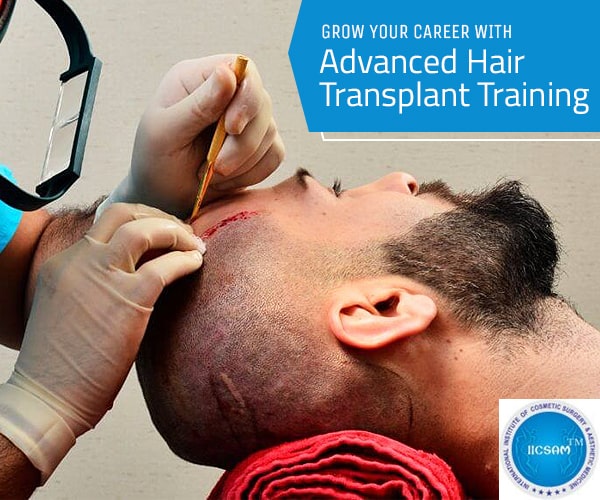
Hair transplant is a surgical method, which helps individuals who are suffering from excessive hair loss. As people are getting more concerned about their appearance due to peer pressure, the demand for hair transplant and restoration are gaining popularity across the world significantly. Therefore selecting a hands-on hair transplant training course makes sense. However, selection of the reputable and well-known hair transplant training institute is important is crucial to gain in-depth knowledge in this field. Before selecting the institute, one must understand what are the types of hair transplant procedures and the basic differences among them.
Not all patterns of baldness and hair fall are identical. Some instances can be treated with general products for hair regrowth. However, for irreversible hair loss, specialized hair transplant methods need to implement. IICSAM offers hands-on hair transplant training course, which can equip the medical practitioners with clinical expertise. When it comes to the latest hair transplant method, Follicular unit excision(FUE) and Follicular unit transplantation(FUT) are the two basic methods. These two procedures are similarly based on the implementation process however the difference exists in the way hair follicles are extracted from the back of the patient’s head.
What are the differences between them?
In FUT method, all the hair is extracted at once in a simple and quick process, which can take fifteen to thirty minutes. On the other hand, in FUT procedures, hairs are extracted individually with the application of minimally invasive technology. In both FUT and FUE methods, when the follicular grafts are ready, small incisions are created in the patient’s receding hairline areas that match the natural hair growth pattern. The follicular grafts are strategically placed one by one with utmost care according to the quantity of hair within each follicle. With the Hair transplant training India offered by IICSAM, one can easily learn the difference between them.
Which process yields successful results?
Both the processes yield successful results while patients enjoy daily activities such as listening to music, watching movies or reading story books. Healing is quick with both methods. However, FUE procedures do not require any stitches. Tiny extraction on the head leaves virtually no detectable scars at all. These places are easily concealed with adjacent hair and heal by themselves, generally within seven days. FUE procedure is preferred by individuals who style their hair very short. FUE procedures require to shave the head of the patients. If the individuals decide to avert short haircut, FUT procedure acts as a better option. The FUT procedure causes a fine scar on the back of the patient’s head while removing graft the grafts as a group which can be easily concealed with the hair length of a half inch or longer.
Conclusion
IICSAM offers a different and unique approach in hair transplant training, unlike other institutes. You need to understand the basic differences between each method while picking the course to gain hands-on knowledge in clinical hair transplantation method.
Date: Contact Us to Know
 Becoming a Laser Hair Removal Expert: Insider Tips from Industry Leaders
 Discover How Cosmetology Courses Enhance Medical Practice for Doctors?
 Elevate Your Practice: Specialized Cosmetology Training for Doctors
 Transform Your Career: Laser Hair Removal Training for ProfessionalsUnleash Your Potential: Become a Laser Hair Removal Specialist Today!